The Following of Jesus Christ by Women Religious
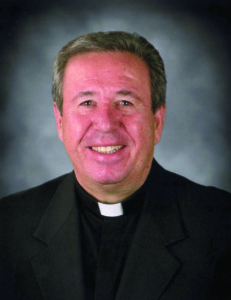
By Eloise Rosenblatt, R.S.M.
This is the first in a series of seven articles which will consider the enduring and foundational themes of religious life: Scripture and the following of Jesus Christ, prayer and spirituality, the Church, vows, community life, apostolate or mission, and charism of the founder. I am a member of a women’s religious community, so my focus will be on my experience as a woman, and the themes that have shaped my own living of religious life for nearly 45 years.
Four-Fold Identity
What will inform my reflections is my four-fold identity: human being, citizen, baptized and vowed. I am a human being who was born a woman, not a man. I thus feel solidarity with my gender in our international struggle for dignity and equality. I know and resist the many forms of discrimination, including violence against women that we suffer precisely because we were born women, not men.
By my birth, I am an American citizen. Living in this enlightened democracy, I am assured of many rights that are defined by the U.S. Constitution and protected by federal and state law. I know that my citizenship guarantees me many entitlements that citizens of other nations do not enjoy as fully. I see that changes in women’s self-understanding as religious have become increasingly linked, in my analysis, to their implicit acknowledgement of citizenship. But for sisters ministering in countries where they themselves are not citizens, this facet of their identity may remain “on hold.” Nevertheless, I will address this theme in subsequent articles and focus on it especially in the treatment of women’s ministry and apostolate.
Shortly after my birth, I was baptized. I have been a member of the Roman Catholic Church, educated in Catholic schools, growing up as a lay person in this denominational tradition of a personal and communal life centered on Jesus Christ, the sacraments, Scripture, and our doctrinal and spiritual heritage.
As a vowed religious, I am a lay person according to Canon Law, not a member of the clergy. While I am not part of the hierarchical structure of the Church, I belong to its charismatic life. My religious consecration is the expression of the Church’s faith life, its love for Jesus Christ, and its longing for holiness and union with God eternally, beyond the limits of life on earth. I identify myself as a woman religious who is a member of the Catholic Church, headed by the Pope and bound to an organization whose bishops and priests are ministers of the sacraments on which I spiritually depend. I voluntarily take on the struggle that comes with being part of the institutional Church. Whether convenient or inconvenient, my life is inextricably bound up with the problems faced by the institutional Church, my spiritual family. I am scandalized by its abuses, embarrassed by its failures, and I pray for its conversion and restoration of integrity.
A Woman’s Point of View
A current reason to consider religious life from a woman’s point of view is that women religious in the U.S., who have their houses of formation in the U.S., are involved in an Apostolic Visitation focused on them as women. The purpose of the Apostolic Visitation, which is outlined at apostolicvisitation.org, is to look at the quality of life of sisters in the U.S., not brothers or priests.
In addition, there is a doctrinal investigation of the organization called Leadership Conference of Women Religious (LCWR), which is composed of the elected presidents of U.S. women’s congregations, and represents 95% of women religious in the U.S.A. The Investigation is a separate initiative aimed at leaders of LCWR women’s congregations. This step was announced by Cardinal William Levada, head of the Congregation for Doctrine of the Faith (CDF) just a month after the Apostolic Visitation was announced by Cardinal Franc Rodé of the Congregation for Institutes of Consecrated Life and Societies of Apostolic Life (CICLSAL) in 2009. The investigation of LCWR is being conducted by Bishop Leonard Blair of Toledo, Ohio.
The process of the 2009-2011 Apostolic Visitation is very different from the previous study of religious life in the U.S. of twenty-five years ago. Initiated in the early 1980’s by Pope John Paul II, it involved both men and women religious. The U.S. study was directed by Archbishop John R. Quinn of San Francisco, California, and focused on two questions: 1) Why had so many members left religious life? 2) Why had so few candidates entered? Archbishop Quinn engaged 40 experts in theology, sociology, post-WW II history, American church life, psychology, and other fields, and their work was reviewed and commented on by 17 bishops. In addition, men and women religious were invited to join discussion groups in each diocese, and under the local bishop, their feedback was given to the Pontifical Commission. Archbishop Quinn sent the 152-page report by the Pontifical Commission to the Vatican in 1986. A summary of it, “U.S. Religious Life and the Decline of Vocations,” was published in Origins, Vol. 16: No. 24 (December 4, 1986). This summary remains a valuable intellectual resource and it offers a contrast with the procedure and focus of the current Apostolic Visitation.
The Documentary “Interrupted Lives”
So what shall we name as the “essential elements” of women’s religious life? I was given a DVD of the 60-minute documentary film “Interrupted Lives: Catholic Sisters Under European Communism.” The producers were Margaret Ann Nacke, C.S.J., and Mary Savoie, C.S.J. It concerns the forty years of disruption of women’s community and ministerial lives suffered by Greek and Roman Catholic Sisters in the Ukraine, Lithuania, Romania, Slovakia and Hungary following WW II. Many scenes from this era were re-enacted, based on the testimony of sisters who suffered and died during this period. Other scenes were narrated by survivors of those terrible years who were able to return to conventional forms of religious life after the fall of Communism and lived to recount their personal experiences for this documentary.
Under the Soviets, sisters were driven out of their convents by police and military officers. Their buildings, schools and hospitals were seized by government authorities and their funds were expropriated by the State. Many women from different congregations were herded together in single monasteries that had been confiscated from men’s communities. Some sisters were imprisoned and suffered physical torture. The details of these abuses were only hinted at. Women who view this documentary have no trouble imagining that some of the worst forms of physical violence were omitted because they were too painful to re-tell or re-enact. Some nuns were forced to work on state-run farms and labor in factories. They were not allowed to take up any work that would involve teaching religion, influencing the spiritual life of children and adults or carrying on ministries where religious doctrine would be taught. Many could not participate in the sacramental life of the Church because organized religion was suppressed under Communism.
Women who wanted to become nuns had to do so in fearful secrecy. There were no novitiates or convents where they could enter and be trained as a group. Women who felt called to religious life met, for example, with a director in the park and received spiritual direction and orientation to religious life as though they were only innocently chatting together on a bench in the afternoon sun. Living quarters were monitored. Phones were tapped. Spies and betrayers were everywhere. They could not wear a habit or be identified publicly as women religious. Even as late as 1989, just prior to the fall of the Berlin Wall, religious life in Lithuania could only be lived as an underground commitment, and there was still fear of discovery and arrest by state authorities. Some women who professed their vows wrote their commitment on a paper in the presence of two or three other sisters in lay clothes, all of them meeting in a secret room behind locked doors. Celebration of the Eucharist as the context for such an event would have been unthinkable. Immediately after signing her vows, the newly professed sister burned the document so there would be nothing in writing to implicate her or her sisters in a religious ceremony. The “public witness” was the memory of two or three brave religious who attended the profession of vows.
“Interrupted Lives” qualifies the discussion of what’s essential to women’s religious life. We have to consider what was the “one thing necessary” to religious life in “Interrupted Lives.” It cannot be that wearing a habit and veil or living a common life in a convent were essential. While some sisters maintained wearing of a habit under extraordinarily difficult conditions as field workers, for example, other sisters were stripped of their habits and wore prison garb while jailed. They were exiled from their convents. Many sisters adopted ordinary lay clothes by force, or by choice to conceal their religious identity. It cannot be that reception of the Eucharist and Confession on a regular basis was an essential element because most women had no access to sacraments administered by a priest for years at a time. It cannot be that a public ceremony of profession was essential because sisters held profession ceremonies in secret and made no public disclosure of their dedication to Christ. It cannot be that a particular apostolic mission was essential because almost all were forbidden to engage in their congregation’s traditional works, and the State confiscated their properties. It cannot be that public identification with the Church and public witness as a Catholic woman were essential. Many sisters had to conceal the fact they were Catholic, did not make a public matter of their faith, and avoided any sign that would betray their affiliation with the Catholic church.
So what was essential?
These heroic women, deprived of all external expression of religious life, acted from a sense in themselves that they were called to consecrate themselves to God, that their whole person belonged to God alone as a way of life, and this choice of a celibate, unpartnered life defined their personal destiny, no matter the risk to themselves. They stayed loyal to a church which was also in hiding and under siege. Women deprived of all the traditional externals of religious life persevered in their following of Jesus Christ for decades under circumstances of extreme religious and personal privation.
Each woman’s story of arriving at this conviction and persevering in her consecration is different. So probably no questionnaire can quantify or reduce these stories to some common narrative denominator. But as a sisterhood, their witness disciplines any discussion about what the Vatican should define as the essential elements of women’s religious life. What do these women have to say for themselves? What is the Church document that expresses their own experience, as women, of fidelity to their vocation?
The Dogmatic Constitution on the Church § 46 says:
“Let religious see well to it that the Church truly show forth Christ through them with every-increasing clarity to believers and unbelievers alike—Christ in contemplation on the mountain, or proclaiming the kingdom of God to the multitudes, or healing the sick and maimed and converting sinners to a good life, or blessing children and doing good to all men, always in obedience to the will of the Father who sent him.”
The women religious whose suffering is memorialized in “Interrupted Lives” manifest a less apostolically attractive imitation of Christ. Their experience embodies a different, darker aspect of the gospel: Jesus surviving in exile and fear for his safety in Egypt; Jesus rejected and disempowered by his neighbors, unable to do any good works; Jesus pursued with no place to lay his head; Jesus in hiding from the authorities; Jesus betrayed by a person he thought a friend; Jesus arrested and put through a sham trial with a mockery made of his human rights; Jesus tortured, battered and made to scream in pain; Jesus, after all his good works, humiliated and treated as a common criminal.
Following Jesus in the Gospels as a Woman
Vatican documents assume that the following of Jesus is gender neutral, and that when the Church refers to the following of Christ, it includes men and woman without regard for their differences of body, mind, psyche, and disposition. However, when left to do their reading on their own, and discuss texts among themselves, women don’t read the gospel in the same way that men preach it.
The women who are associated with Jesus are typically single, unpartnered women. Church documents of the last 40 years about women insist that the woman’s person, role, vocation and destiny are complementary to the man’s. The woman is essential to God’s plan and the life of the Church as the helper of man. Great respect should be accorded her dignity and equality as a person made in the image and likeness of God. But nonetheless, a woman doesn’t qualify for ordination. In Genesis, Eve was created for Adam. Thus, the woman is defined as the helper created for the man, to relieve his loneliness. Exegesis in these documents argues that the creation story in Genesis defines for all time the proper and complete understanding of woman’s relationship to man in society and Church.
But when women look at the actual gospel narratives, they see quite a number of differences between men and women--in the way women relate to Jesus and the way Jesus treats women. As for the “unpartnered rule,” some exceptions exist in the gospels: Mary the mother of Jesus and wife of Joseph, Jairus who is married and has a daughter who is ill, the mother of the sons of Zebedee who asks that her sons sit on the right and left hand of Jesus in his kingdom and Joanna the wife of Chuza, Herod’s steward. However, most women do not appear in the company of Jesus as the female representative of a nuclear family in a woman’s conventional role as wife of an identified husband.
Some of the women are mothers, such as the widow of Naim, the Canaanite woman, or the daughters of Jerusalem during the Passion. But no husband is in sight. They are not identified as the wife or helper of a man. The vast majority of women appear on their own, with no evidence that their personhood is complementary to their husband’s. The Samaritan woman in John’s gospel is decidedly unpartnered, and has de-partnered herself five times. Other unattached women include the woman with the issue of blood who touches the cloak of Jesus, the bent-over woman in the synagogue healed by Jesus, the woman taken in adultery, the sinful woman who wipes the feet of Jesus with her hair, Martha and Mary of Bethany, and Mary Magdalene.
The point here is that the anthropology of women described in Church documents, the complementarity of the woman created as partner and helper for the man, does not correspond to narratives about women in the gospels where women follow Jesus and where Jesus meets them. Thus, the “following of Jesus” by women religious takes on a special resonance when they re-read gospel narratives about Jesus’ relationship with women. As vowed women, they have chosen to be unpartnered for the sake of the kingdom. By their vow of celibacy, they are not helpers or partners of a particular man.
Jesus loved women. Women supported him out of their means. They were loyal to him to the end, even when his male disciples abandoned him. They were the first witnesses and proclaimers of Jesus’ resurrection. Despite the fact that they were terrified and afraid, according to the original ending of Mark’s gospel, they finally mustered up their courage and told unbelieving male disciples the truth about Jesus that would become the foundation of Christian belief. But they made their proclamation of the resurrection, not as Eve-figures, helpers or partners to husbands, but as an autonomous sisterhood of women, speaking with one voice to the male disciples. The voice of women, embodied in the message of Mary Magdalene, must be read as the first missionary preaching of the post-resurrection Church.
The following of Jesus by women religious, rooted in a gospel read from the gender perspective of women, has a clarity that can invigorate the reader. This horizon of meaning goes far beyond the usual spiritual message that women religious are to embody responsive service to others, silence and self-effacement before men and obedience to superiors. The literacy of women and their own experience should prompt them to critique a preaching tradition that has ignored the special character of Jesus’ relationship with women. There is more to the following of Jesus than having faith, being obedient, begging for healing, practicing self-critical humility and hoping for eternal life.
It can be noted, as encouragement to women religious, that in the gospel healing stories, women are delivered from many kinds of suffering. But women are never blind. Women are never deaf. And women are never mute.